


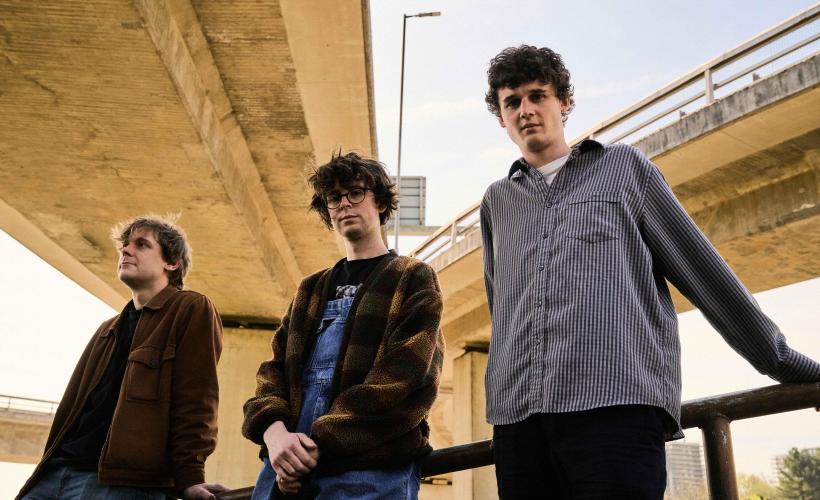
Shaking Hand
Shaking Hand are a Manchester post-rock trio consisting of Ellis Hodgkiss, Freddie Hunter and George Hunter. Active since 2024, the group works within indie rock and post-rock, while their writing also draws on post-punk, math rock and wider alternative guitar music.
Style and influences
The band describes its music through contrast and instability: quiet passages build into louder sections, repeated patterns create a hypnotic feel, and rhythms and riffs are allowed to shift or break apart. Their material draws on early post-rock and 1990s US alternative rock, and their sonic references include Women, Slint, Sonic Youth, Pavement and Ulrika Spacek, alongside the melodic approach of Big Thief and the dynamic intimacy of Yo La Tengo.
Writing and sound
Shaking Hand’s approach leans toward structural tension, with sudden tempo changes, polyrhythms and guitar parts that move between fragile and ecstatic. The band presents this as a form of “Northwest-emo”, combining a sense of nostalgia with a forward-looking sound. Their songs are also shaped by the atmosphere of Manchester, particularly its constant redevelopment and the contrast between old industrial spaces and new buildings.
Recording and material
Early ideas such as “Night Owl” and “Sundance” develop from George Hunter’s lockdown writing period, when altered tunings including open E and drop D opened up new textures. Later songs such as “Cable Ties” and “Mantras” emerge from rehearsal spaces and carry a darker, heavier feel. The band records with producer David Pye at Nave Studios in Leeds, a converted church, and tracks basic performances live before adding vocals and guitars. Unusual recording methods also feed into the sound, including Soviet-era microphones, unconventional mic placement and phone-recorded demos.
Lyrics and artwork
The lyrics often use abstraction, but they are rooted in direct emotional responses and observations of everyday life. Themes include optimism and doubt, youth and work, and the experience of living in a changing city. The album artwork uses unused plans for a 1970s redevelopment project for Los Angeles by architect Ray Kappe, titled “People Movers”, echoing the band’s interest in construction, impermanence and urban change.
forum Join the Discussion
Sign in to joinNo comments yet
Be the first to weigh in.