


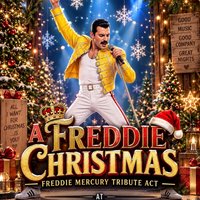
Freddie Mercury is a singer, songwriter and performer best known as the frontman of Queen. Born Farrokh Bulsara in Stone Town in 1946, he grows up in Zanzibar and India before moving to England as a teenager. He is associated with classic rock, glam rock, disco, dance-pop, pop, classical and classical crossover, and he also appears in the groups Ibex, Wreckage and Sour Milk Sea.
Early life and education
Mercury is born into a Parsi family and spends much of his childhood in India, living with his grandmother and aunt. He attends St. Peter’s boarding school near Bombay, where he learns piano and joins his first band, The Hectics. He later studies art and graphic design at Ealing Art College and uses those skills in creating the Queen crest. His family leaves Zanzibar after the 1964 revolution, and he settles in England at 17.
Queen
Mercury becomes the lead singer and one of the principal songwriters in Queen. His voice is notable for its wide range and for the theatrical delivery that helps define the band’s live performances. He writes many of their best-known songs, including Killer Queen, Bohemian Rhapsody, Somebody to Love, We Are the Champions, Bicycle Race, Don’t Stop Me Now, Crazy Little Thing Called Love, Seven Seas of Rhye and Play The Game. On Queen’s Greatest Hits album, he writes ten of the seventeen tracks.
His songwriting covers a wide range of styles, from rock and rockabilly to heavy metal and disco. Bohemian Rhapsody is described as structurally unusual and harmonically complex, while Crazy Little Thing Called Love uses only a small number of chords. He mostly writes on piano, sometimes choosing keys that are difficult for Brian May to play on guitar, and he also contributes guitar parts and riffs, including material heard in Bohemian Rhapsody. He says he has no formal vocal training and can barely read music.
Solo work and collaborations
Mercury releases two solo albums, Mr. Bad Guy in 1985 and Barcelona in 1988. Mr. Bad Guy is pop-oriented and strongly shaped by disco and dance music, with a heavy synthesizer sound. A remix of “Living On My Own” later reaches number one on the UK Singles Chart and earns him a posthumous Ivor Novello Award. Barcelona is recorded with Montserrat Caballé and combines popular music with opera.
He also records material with Michael Jackson, including “There Must Be More To Life Than This,” “State of Shock” and “Victory,” though these tracks are not officially released in his lifetime. He is originally scheduled to appear on the Thriller album. Under the stage name Larry Lurex, he records a 1973 cover of the Beach Boys’ “I Can Hear Music.”
Personal life and death
Mercury has a long relationship with Mary Austin, who remains an important close friend after they separate. He is openly gay in interviews from the 1970s onwards and later lives with Jim Hutton, who cares for him during his illness and is with him when he dies. Mercury is diagnosed with HIV in the late 1980s and dies in 1991 from bronchial pneumonia resulting from AIDS. His death helps increase public awareness of the disease.
He has a strong attachment to cats, at one point owning as many as ten, and dedicates Mr. Bad Guy and the song “Delilah” to them. He is also known for his overbite, which he considers correcting, but he worries that surgery might affect his voice. His funeral is conducted by a Zoroastrian priest, and he is cremated at Kensal Green Cemetery.
Legacy
After his death, the remaining members of Queen found the Mercury Phoenix Trust and organise The Freddie Mercury Tribute Concert. Mercury is widely regarded as one of popular music’s major vocalists and songwriters, and several polls place him among the most admired British and English-language singers.
forum Join the Discussion
Sign in to joinNo comments yet
Be the first to weigh in.