



Aufgang
Aufgang is a group built around two acoustic grand pianos and electronics. The line-up consists of Rami Khalifé and Francesco Tristano on pianos, with Aymeric Westrich handling programming, sampling and drums.
Formation and background
Rami Khalifé and Francesco Tristano meet in New York in 2000, while both study piano at the Juilliard School. While still in classical training, they begin exploring electronic music alongside their work, with a particular interest in house music. They start performing together and develop a blend of acoustic and electronic sounds that resists easy genre labels.
Aymeric Westrich joins in 2001 after moving to New York from the same school as Khalifé. The three then form a shared project centred on experimentation and improvisation.
Early development and activity
The group pauses while the members pursue separate projects. During that period, Khalifé performs internationally, works with his father and with other groups, records two classical albums, and works for film and dance. Westrich works as a producer and composer in hip hop, and also plays drums with Cassius during the French Touch period. Tristano releases several noted recordings, including Bach’s Goldberg Variations in 2001, and receives multiple prizes.
Tristano later releases Not For Piano in 2007, a record post-produced by Fernando Corona, also known as Murcof. The album includes three covers of electronic tracks, among them Jeff Mills’s The Bells. He then works with Moritz von Oswald on Auricle Bio/On, released by InFiné in 2008 as a two-track album of two 20-minute pieces.
Live breakthrough and recordings
Aufgang’s formal beginning is in June 2005, when they perform at Barcelona’s Sónar Festival. The booking follows a meeting in Barcelona, where Tristano is playing a recital at an art gallery event and Jeff Mills attends with the Sónar booker. After Tristano and Khalifé play an unplanned version of The Bells, the trio are invited to the festival. They rehearse for five nights before the show and then deliver a performance that establishes the group’s live reputation.
Their music develops around structured songs, improvisation and a mix of acoustic and electronic elements. It is described through references to contemporary music, electro and post-rock. Their debut album is released on InFiné/Discograph after a long period of development, and follows the Sonar EP, which includes remixes by Spitzer and Krazy Baldhead. François Baurin mixes the album and is referred to as a fourth member in the group’s working process.
Style and performance
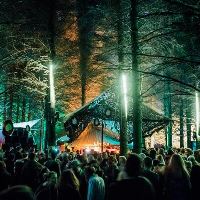
Aufgang present the piano as a machine-like instrument, using it in combination with drums and other electronics to build music that shifts between different stages and layers. Their live performances are central to the project, with appearances at events such as the Transmusicales Festival in 2007 and the Venio Festival in the Netherlands in 2008, where they play to large crowds.
The group’s name is the German word for “stairway”, and their sound is shaped by the meeting of classical technique, club culture and open-ended experimentation.
forum Join the Discussion
Sign in to joinNo comments yet
Be the first to weigh in.