


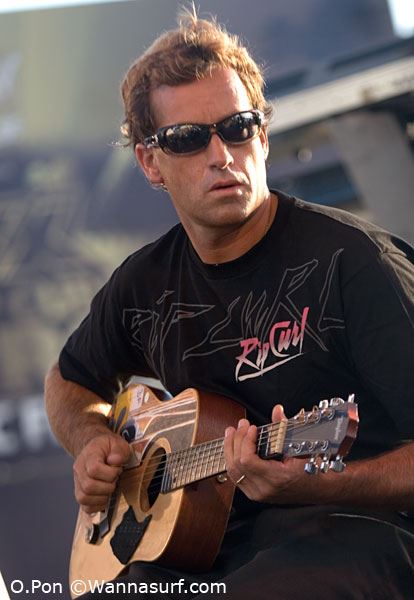
Tom Curren is a surfer and musician from Santa Barbara, United States, born in 1964. He is known first for competitive surfing, where he becomes world champion three times, in 1985, 1986 and 1990. He is the son of Pat Curren, a big-wave surfer and shaper, and Jeanine, and he has a brother, Joe, who is also a professional surfer and photographer, as well as a sister.
Surfing career
Curren emerges in the early 1980s as a major figure in surfing and helps lead a wider shift in the sport. He develops a reputation for smooth, powerful surfing and for a highly effective competitive style. After a five-year rise to the world title, he is regarded as one of the most original surfers of his era. He later makes a high-profile decision to retire from competitive surfing in the mid-1990s, although he still appears in surfing contests, including events on the ASP World Qualifying Series and World Championship Tour trials. He also takes part in the Annual Switchfoot Bro-Am Surf Contest, competing on the Switchfoot team for three consecutive years.
He lives in Panama. In 1993, after a break from competition, he returns at a surfing event in France riding a 1970s 5'5" twin-fin board he has bought second hand in a New Jersey surf shop. He defeats Matt Hoy, who is ranked eighth in the world at the time, and that appearance helps popularise the use of the fish board in a modern context.
Curren also works under a contract with Channel Islands, where he co-produces and rides several pro surfboard models, including the Black Beauty and the Red Beauty.
Music
Curren plays several instruments from the age of fifteen, including drums, bass, guitar, and also sings and composes. His music is described through the facts here as raw, honest, minimal and often bluesy, with folk and blues rock influences. Although he is primarily known for surfing, he develops a parallel musical career that grows through the 1990s.
In late 1993 he undertakes a 27-stop national American tour with his band Skipping Urchins, performing at hardcore surfing outposts. He later collaborates and jams with a range of prominent musicians. In 1998, during a visit to Sydney, he walks into EMI Studios and records six live tracks with only guitar and voice. He continues to write, record and rehearse for performances at major surfing events and mainstream venues.
His music remains closely tied to surf culture, but it also extends beyond that scene and draws on his wider musical interests and personality. His friend Jack Johnson’s recording success is noted as evidence that music linked to surfing reaches a wider audience than a narrow “surf market”.
forum Join the Discussion
Sign in to joinNo comments yet
Be the first to weigh in.