


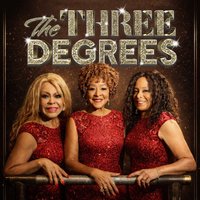
The Three Degrees are a female vocal group from Philadelphia, United States, active from 1963 to the present. They work in soul, disco, smooth soul and philly soul, and have been associated with Swan Records, Roulette, Philadelphia International Records, CBS/Sony Inc. and Ariola.
History
The group forms in Philadelphia in 1963 and is discovered by producer and songwriter Richard Barrett, who also works with acts including The Chantels, Little Anthony and the Imperials, and The Valentines. Although the act always performs as a trio, its membership changes several times; twelve women represent the group over time.
The original line-up is Fayette Pinkney, Shirley Porter and Linda Turner. Barrett records this line-up on its first song, “Gee Baby (I’m Sorry)”, for Swan Records. Turner and Porter leave and are replaced by Helen Scott and later other singers, while Janet Harmon joins in the mid-1960s. Sheila Ferguson, a high school friend of Scott, is also managed and produced by Barrett and signed to Swan Records in 1965. Scott takes lead vocals on singles including “I’m Gonna Need You” and a cover of “Maybe”. By 1966 Scott leaves to start a family, and Ferguson fills in and remains with the group for 20 years. Ferguson also sings backup on the group’s Swan recordings, as the Three Degrees do on her solo singles.
Harmon leaves in 1967 and Valerie Holiday joins. Barrett then signs the group to recording contracts with Warner Bros., Metromedia and Neptune, a label owned by Kenny Gamble and Leon Huff. The group builds a reputation as a nightclub act, but major chart success has not yet arrived.
Commercial breakthrough
By 1970 the group is signed to Roulette Records and releases its first album, Maybe. The title track reaches number four on the US R&B chart. Singles including “I Do Take You” and “You’re the Fool” follow, along with the album So Much Love.
This period leads to a cameo appearance in the film The French Connection, filmed during one of the group’s appearances at the Copacabana in New York. The group also performs at the Riviera Hotel in Las Vegas with Engelbert Humperdinck.
In 1973, as the Roulette contract ends, Barrett signs the group to Philadelphia International Records under Gamble and Huff. The group records four albums for the label. Its first recording there is “TSOP (The Sound of Philadelphia)” with the studio band MFSB, which becomes the theme song for Soul Train. The first album on the label produces three hits. “Dirty Ol’ Man” goes gold in the Netherlands and Belgium, “Year of Decision” reaches the UK Top 20, and “When Will I See You Again” becomes the group’s biggest hit. The song tops the UK Singles Chart, sells more than two million copies and earns a gold record from the RIAA.
The group also records two live albums in 1975, one in Leicester and one in Tokyo. Its second Philadelphia International album is issued internationally under different titles, including With Love in Europe, and includes “Take Good Care of Yourself”, a UK Top 10 hit. The album also yields “Midnight Train” and “Nigai Namida”, the latter recorded in Japanese.
Later recordings and line-up changes
In 1976 the group leaves Gamble and Huff and moves to CBS Sony/Epic Records. It releases the concept album A Toast Of Love for the Far East market, although the title track is also issued more widely. Pinkney leaves in 1976 to return to full-time education and is replaced by Helen Scott, who returns after a 10-year break. The group then releases Standing Up for Love in 1977.
In 1978 the group signs to Ariola Records in Europe and the United States and begins working with Giorgio Moroder. Two albums on Ariola produce four UK Top 20 hits: “The Runner”, “My Simple Heart”, “Giving Up Giving In” and “Woman In Love”. The group performs at Buckingham Palace for Prince Charles’ 30th birthday party and later appears at his pre-wedding party for Princess Diana. In October 1979 it records its own television programme, The Three Degrees at The Royal Albert Hall.
Between 1982 and 1985 the group releases two albums on its own 3D label, Album of Love and Live in the UK. A single written by Ferguson, “Liar”, appears on the label. The group returns to the charts in 1985 with “The Heaven I Need”, produced by Stock/Aitken/Waterman on Supreme Records. Another BBC television show, Take 3 Degrees, is recorded in 1982 and includes both older songs and material from its then-current show, such as “I Can’t Turn You Loose” and “Celebration”.
In 1986 Miquel Brown fills in for Scott while she is expecting. Ferguson leaves that same year. Scott and Holiday replace her with Vera Brown in 1986 and Rhea Harris in 1987. In 1989 Scott and Holiday, with new member Victoria Wallace, record ... And Holding for Ichiban Records. The album includes “A Tender Lie”. The group then records a live CD at London’s Dominion Theatre with Billy Paul and Harold Melvin & the Bluenotes, followed by a UK and Japan tour later that year.
In December 1989 Cynthia Garrison replaces Wallace, forming the group’s longest-running line-up. In 1993 the group records a new version of “When Will I See You Again” with Thomas Anders of Modern Talking. Anders contributes three tracks to Out the Past Into the Future, which marks the group’s return to Ariola Records. The group continues to tour with Scott, Holiday and Garrison.
Recognition
The Three Degrees are described by the media as “Prince Charles’ favourites”. They are the first girl group to top the UK Singles Chart since The Supremes in 1964. In 2007 and 2008, the group and former member Fayette Pinkney receive honours from BIMA and the City of Philadelphia for their contribution to music over five decades. When the four women appear together for the awards, they are presented as The Four Degrees.
Selected members
The group’s members and former members include Helen Scott, Janet Jones, Fayette Pinkney, Shirley Porter, Linda Turner, Sheila Ferguson, Valerie Holiday, Victoria Wallace, Cynthia Garrison and Freddie Pool.
forum Join the Discussion
Sign in to joinNo comments yet
Be the first to weigh in.