



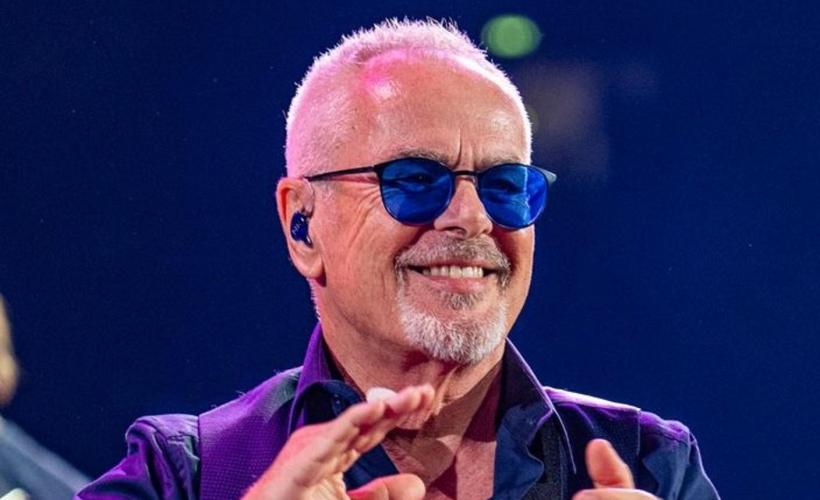
Nik Kershaw
Nik Kershaw is an English singer-songwriter from Bristol, born in 1958. He begins his career as a guitarist in jazz-funk and underground bands, playing and singing in various groups from around 1976 before choosing to focus on songwriting. Although he first writes with the aim of giving songs to other performers, he goes on to record as a solo artist himself.
1980s breakthrough
He signs to MCA Records in 1983 and releases his debut single, I Won't Let The Sun Go Down On Me, which narrowly misses the UK Top 40. His breakthrough follows in early 1984 with Wouldn’t It Be Good, which reaches number 4 in the UK charts. The track is known for its video, in which he appears as a chromakey-suited alien.
His debut album, Human Racing, produces three more UK Top 20 hits, including the title track and a reissue of his first single. The reissued I Won't Let The Sun Go Down On Me becomes his biggest hit as a performer, reaching number 2 in the UK. During 1984 and 1985, he spends 62 weeks on the UK Singles Chart, a total that is higher than that of any other solo artist at the time.
Further hits and Live Aid
Kershaw follows this with The Riddle, another major hit and the title track of his second album. That album also yields two more UK Top 10 singles, Wide Boy and Don Quixote. He performs at Live Aid at Wembley Stadium in July 1985.
His backing band is called the Krew, and he attracts criticism from some quarters for doing too much on stage while they handle many of the guitar and keyboard parts.
Songwriting for other artists
After his own chart success begins to fade, Kershaw continues as a songwriter. He writes The One and Only, which gives Chesney Hawkes a UK number one single in 1991 and appears on the soundtrack to Buddy’s Song and in the film Doc Hollywood. In 1993, The Hollies have a minor hit with his song The Woman I Love.
He also appears as a vocalist on Tony Banks’ album Still and contributes some of the writing on that record.
Later solo albums
Kershaw releases Radio Musicola as the lead single from his third album; despite critical praise, the album does not chart in the UK and the single becomes his last UK Top 40 hit. He then works with producer Peter Wolf on The Works, later re-recording the album with Julian Mendelsohn after neither is satisfied with the first version. One Step Ahead, the album’s lead single, reaches number 55, and the album’s failure leads to his departure from MCA Records.
He later returns with 15 Minutes in 1999, described as a more personal and mature set of songs with a Britpop influence. To Be Frank follows in 2001 and, like You’ve Got To Laugh, uses acoustic guitar rather than synthesiser as a main feature. EI8HT moves back towards a commercial pop sound and brings synthesisers back into his music. His later album Oxymoron is released in 2020, and he also begins releasing a series of EPs titled Songs from a Shelf.
Style and standing
He is associated with new wave, pop, pop rock, synthpop and synth pop. His work earns awards and attracts admirers for his songwriting, including Elton John and Eric Clapton. He is also identified as a former teen idol of the 1980s and continues to perform regularly.
forum Join the Discussion
Sign in to joinSeen Nik Kershaw live? Which set stood out?
Sign in to post — it only takes a moment, and keeping accounts is how we keep the bots out.
No comments yet
Be the first to weigh in.