




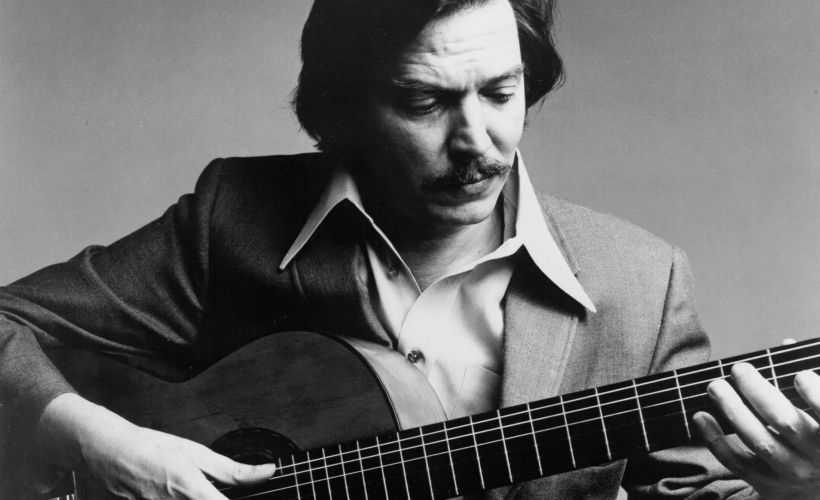
Antônio Carlos Jobim
Antônio Carlos Brasileiro de Almeida Jobim, known as Tom Jobim, is a Brazilian composer, pianist, songwriter, arranger and singer from Tijuca, Brazil. He is born in 1927 and dies in 1994. He is closely associated with bossa nova and jazz, and is widely regarded as one of the main figures in Brazilian music.
Career and style
Jobim helps to internationalise bossa nova and, with the support of American musicians, blends it with jazz in the 1960s to form a new sound that achieves wide popular success. He is often described as a father of bossa nova and as a central force in the style’s development. His music draws on the work of Pixinguinha, and he studies with Lúcia Branco and, from 1941 onwards, Hans-Joachim Koellreutter. He is also influenced by Claude Debussy, Maurice Ravel, Heitor Villa-Lobos and Ary Barroso.
As a young man with limited money, he earns a living playing in nightclubs and bars, then works as an arranger for a recording label before gaining wider recognition as a composer. His songs are performed by many singers and instrumentalists in Brazil and internationally, and his writing becomes part of jazz and pop standard repertoires. His lyrics often deal with love, self-discovery, betrayal, joy, birds, Brazilian natural settings, folklore and Rio de Janeiro.
Notable recordings and awards
In 1965, Getz/Gilberto becomes the first jazz album to win the Grammy Award for Album of the Year. The record also wins Best Jazz Instrumental Album – Individual or Group and Best Engineered Album, Non-Classical. Its single “Garota de Ipanema” (“The Girl from Ipanema”) is one of the most recorded songs of all time and wins Record of the Year. The song is recorded more than 240 times by other artists.
His 1967 album with Frank Sinatra, Francis Albert Sinatra & Antônio Carlos Jobim, is nominated for Album of the Year in 1968. His last album, Antonio Brasileiro, is released after his death.
Later life
In early 1994, after completing Antonio Brasileiro, he reports urinary problems to his doctor, Roberto Hugo Costa Lima. He undergoes surgery at Mount Sinai Hospital in New York City on December 2, 1994, then dies on December 8 after cardiac arrests caused by a pulmonary embolism. He is buried in Cemitério São João Batista in Rio de Janeiro.
His music is also associated with Tom Jobim e Orquestra and Corcovado Music Corp.
forum Join the Discussion
Sign in to joinNo comments yet
Be the first to weigh in.