


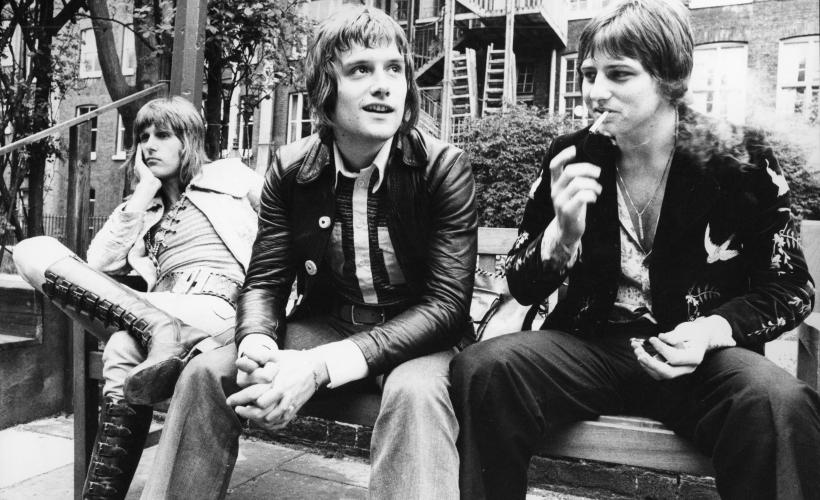
Carl Palmer is an English drummer and percussionist from Handsworth, Birmingham, and one of the best-known rock drummers to emerge in the 1960s. He is associated with progressive rock, instrumental rock, art rock and classic rock, and his career spans work in several major British bands as well as solo projects and touring ensembles.
Early career and major bands
Palmer performs with The Crazy World of Arthur Brown, Atomic Rooster, Emerson, Lake & Palmer, Asia, Qango and Carl Palmer’s ELP Legacy. He meets Greg Lake and Keith Emerson, and by 1970 the three form Emerson, Lake & Palmer, taking the band name from their surnames in alphabetical order. ELP becomes the most successful group of his career, and he remains with them until they disband in 1980.
ELP develops a sound that combines art rock, jazz, electronica, pop rock and classical music. Palmer later rejoins the reformed line-up in 1992 for Black Moon, In the Hot Seat, a box set, several DVDs and the tours that follow. The group reunites again in the early 1990s for the progressive rock circuit and outdoor summer concerts, and also releases two new studio albums. A one-off ELP performance at the 2010 High Voltage Festival marks the 40th anniversary of the band’s formation.
Asia and later work
After ELP’s 1998 break-up, Palmer works with Asia’s John Wetton in Qango. He later reunites with the original Asia line-up in 2006. That version of the band celebrates its 25th anniversary and goes on to release Phoenix and Omega, as well as the live album and DVD Fantasia on Eagle Rock Records.
Alongside these group projects, Palmer tours with the Carl Palmer Band, featuring Paul Bielatowicz on guitar and Stuart Clayton on bass, and later a trio version of that touring band with Paul Bielatowicz and bassist Simon Fitzpatrick. He also releases four new albums, including Working Live Vol. I & II and an anthology album. He performs drum clinics across the UK, Europe and the United States.
Performance style and recognition
Palmer is known for extended drum solos that use gongs and tambourines and for his complex double bass drum playing. During the 1970s, 1980s and 1990s, removing his shirt forms part of his drum solo presentation, though on later tours he keeps it on throughout. He is also a patron of the British Classic Rock Society, which promotes progressive rock concerts.
forum Join the Discussion
Sign in to joinNo comments yet
Be the first to weigh in.